Inquiry in English — so students actually speak it
When every activity runs in English, students begin to think in it. That is the moment English stops being a subject and starts being a language.
How can a whole inquiry program run in English?
Four conditions have to be met
Motivation

When curiosity, ownership and progress start feeding one another, English stops being a subject and becomes something students reach for.
Environment

In an English-only room, switching to Japanese quickly feels out of place. Students think in English because it is the natural thing to do.
Method

We do not teach English. We recreate the way a small child picks up a language, so the thought driving a student is always “I want them to understand me,” never “I want to get better at English.”
Theory

Grounded in language acquisition research: the work is about making meaning and understanding it, not about grammar drills and memorization.
Every LeadGL course rests on theory that holds up in the research literature, tested against our own work in the classroom.
Inquiry-based learning at LeadGL Academy
Built on the innovation methods
global companies actually use
This does not stop at “look it up and present it.”
- Effective Problem Definition – Students research and experiment until they have found the problem actually worth solving, and can state it precisely.
- Scientific Method & Critical Thinking – Testing, reading the data and learning from what failed is what turns an idea into innovation. Even an idea everyone agrees is brilliant will not get there on inspiration alone.
- Collaboration, Leadership & Grit – Working as a team builds collaboration, leadership and the persistence to finish what they started.

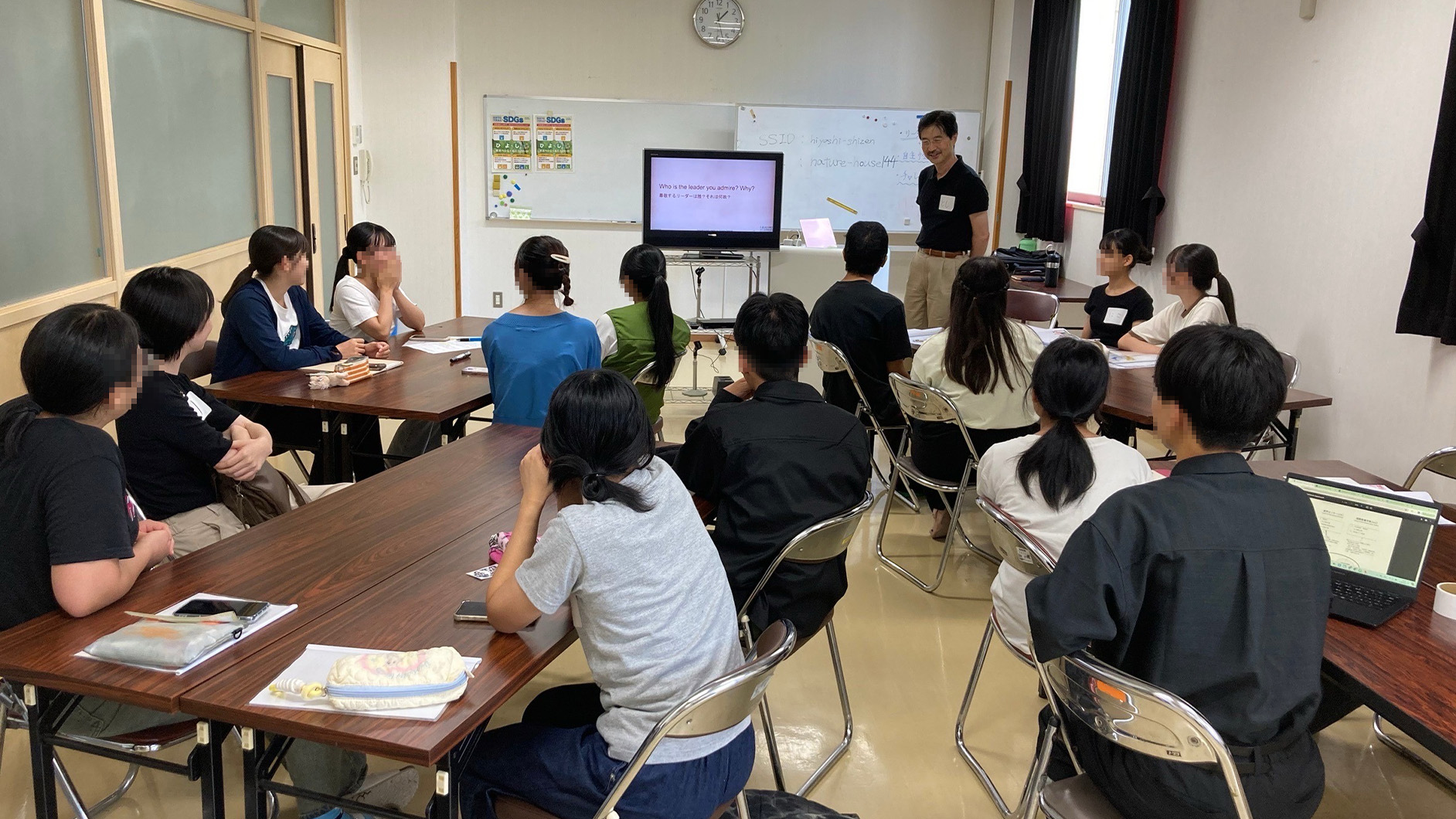
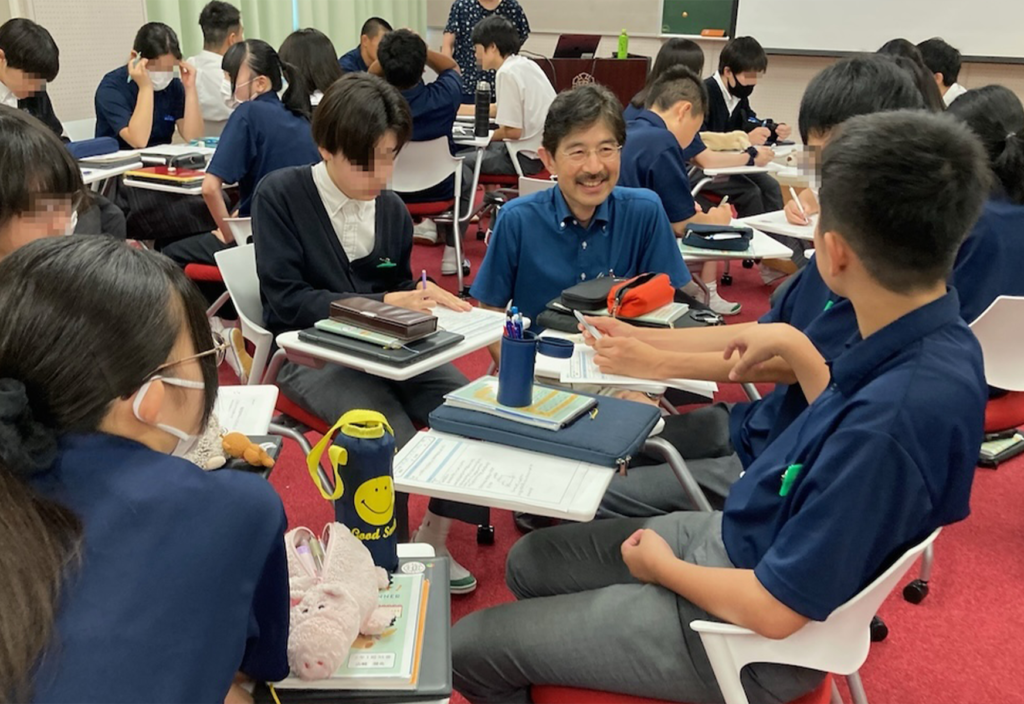
Students lead. The instructor facilitates.
Dialogue, feedback and mini-lessons, given in response to what students are actually asking
- Open Office Hour – Beyond the inquiry sessions themselves, students have open time with the instructor: to ask, to argue, and to brainstorm as a team with the instructor in the room.
- Mini Lessons – When a question comes up, the instructor gives a 3–10 minute mini-lesson at the point where it will actually land. The library is built to cover the range of questions students raise — municipal and corporate accounting, inductive and deductive reasoning, behavioral psychology, and more.
Shaped around your school
We propose whichever format fits your school
- Intensive: a 3–5 day project block, which works well in the long holidays
- Short series: once a week for 4–8 weeks, which suits after-school or Saturday classes
- Full year: inside the Period for Inquiry-Based Cross-Disciplinary Study, typically one period across eight sessions
- Teacher training, so you can run it yourselves: under license, your teachers take the program over and keep it running.

How other schools have set it up
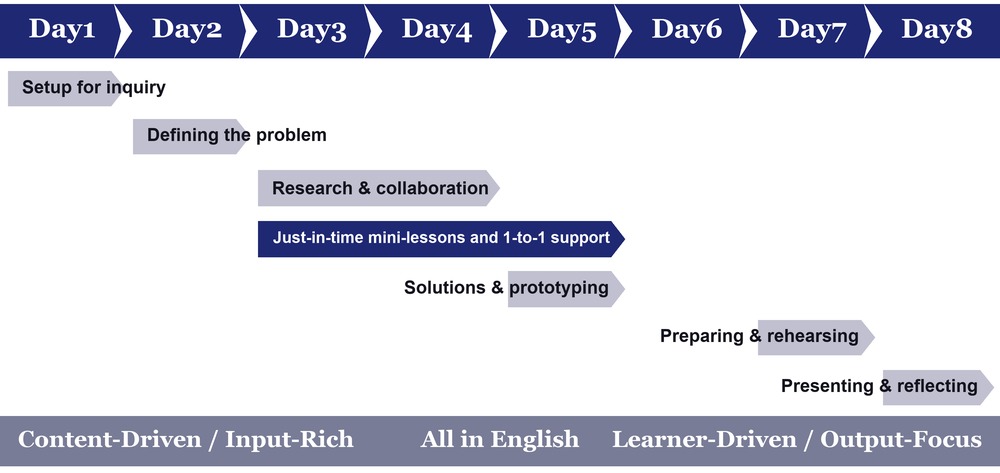
A few real configurations. Duration, number of sessions and format are all adjustable, so tell us what your calendar allows.
Diversity, globalization and AI all point the same way:
students need to be able to steer their own lives*
LeadGL Academy grew out of something our founder kept noticing at global companies: young colleagues from all over the world who could think for themselves, act, and lead — and a growing concern about what Japanese schooling leaves out, above all the confidence to state a view and create something of value.
We bring together current language acquisition methods, the way R&D teams actually create value, and leadership development. English is the tool; the change we are after is how much ownership students take.
If a language is acquired by using it, then inquiry in English is the best possible place to put that principle to work.
- English: the goal is to be understood, and that is what makes English settle in as a language.
- Thinking and leadership: taking the initiative and delivering as a team is what builds critical thinking and leadership.
- No extra load on teachers: we handle the lesson design, the materials and the delivery, and set your school up to run it without us.
Students leave with more than the confidence to speak English. They leave with capability that works anywhere.
* This sits at the core of Japan’s new national Courses of Study, which take effect in 2030. Source: Hisayoshi Muto, “Revising the Courses of Study for the era of generative AI and the GIGA School program,” keynote, EDIX Tokyo, 15 May 2026.

The three capabilities we build
For secondary students who will grow up as global citizens, we teach English, leadership and entrepreneurship as one thing — and build, in practice, the capability to live and work anywhere.
Students build all three by using English, not by studying it.
English is never the goal here. That is exactly why they end up acquiring it.
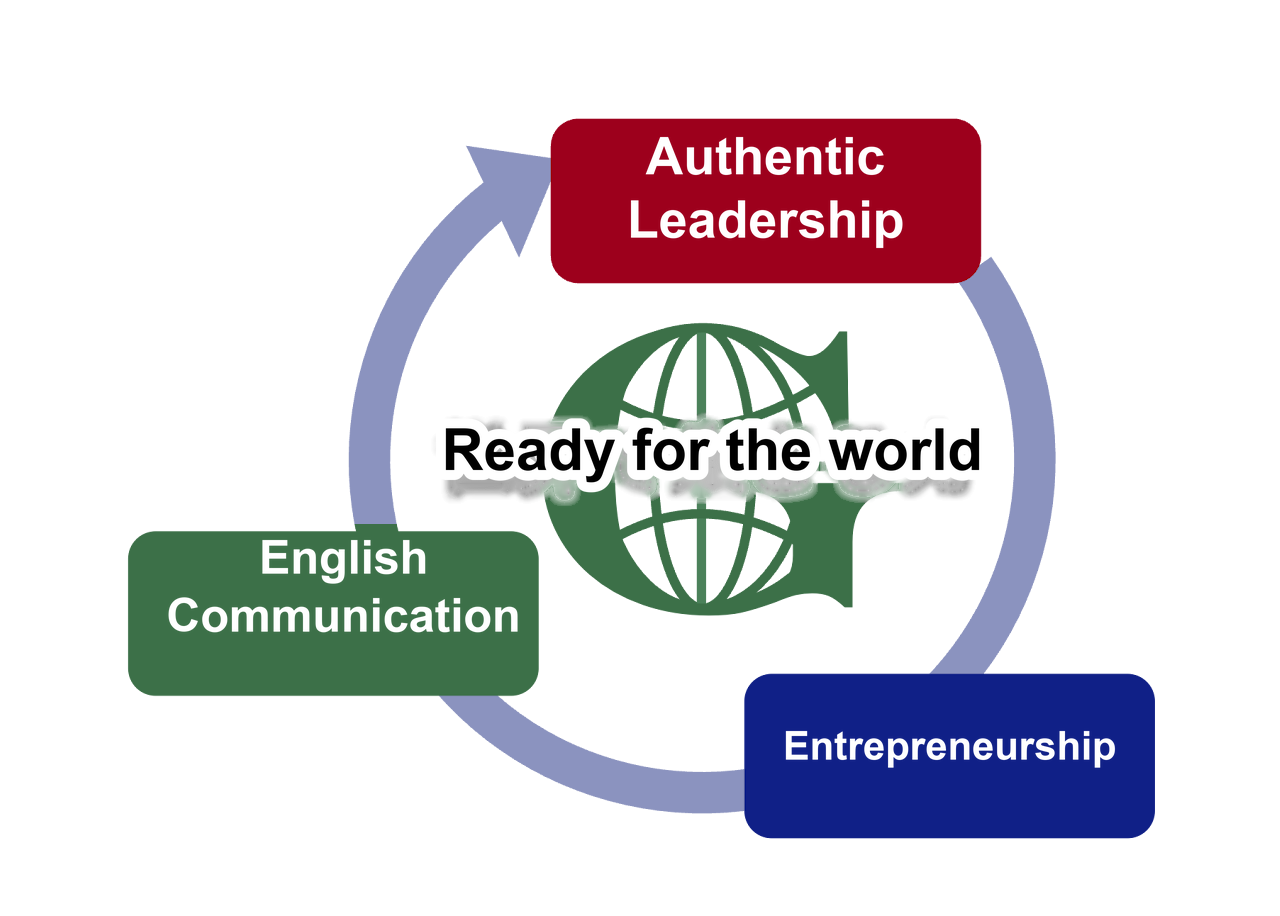
Authentic Leadership
Moving people and building something better, from who you actually are.
Entrepreneurship
Finding the problem worth solving, executing creatively, and creating value.
English Communication Skill
Reaching the rest of the world by using English as a tool, rather than studying it as a school subject.
As AI and globalization accelerate, knowing the right answer counts for less and less.
What counts is thinking, acting and working well with other people.
Why one school chose us

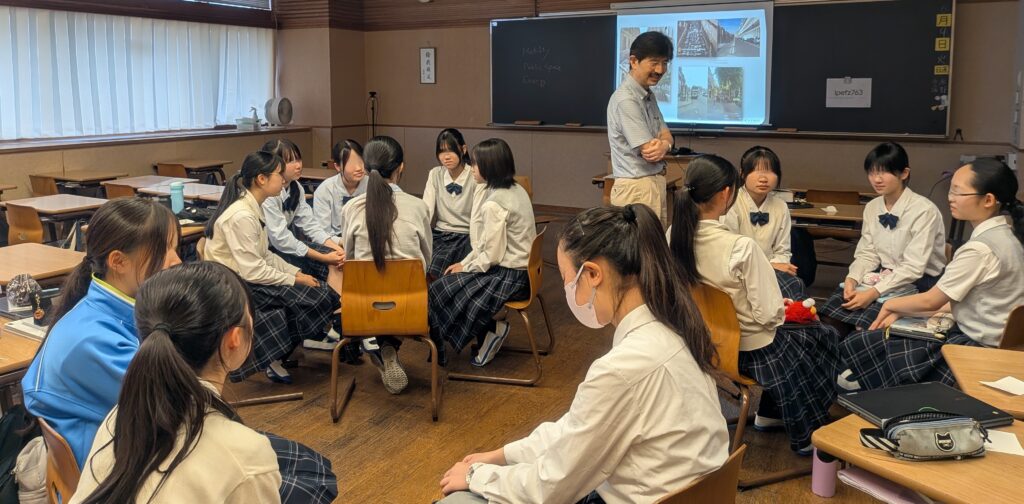
Denenchofu Gakuen adopted the program.
This is how they explained the decision.
What they were looking for
- English used on something real
-
We knew some of our students wanted to do something real in English. English lessons alone could never give them that, and we had been looking for a concrete answer for a while.
- A stronger inquiry program
-
We wanted to strengthen our inquiry classes, but running inquiry entirely in English was something we had never managed to pull off.
English, inquiry and leadership — solved together.
English they can use

Students stop memorizing English and start using it, over and over, as a tool to find things out and to make themselves understood. That is how a language settles in.
Finding problems, creating value, finishing what they start

- Research teaches students to frame a question worth asking.
- Small experiments — including the ones that fail — teach them how to turn an idea into something real.
- They develop real empathy for people and for society, and learn to create value.
Initiative, judgment and leadership

- Students come to know their own values and their own purpose, and learn to act with confidence and humility at the same time.
- They learn to work on problems that have no right answer.
- They learn to take the first step into unfamiliar territory, and to make a path where there is none.
How to get started
Online is fine. Scope is open — a whole year group, a short pilot, whatever suits you.
Just get in touch
Duration, participants, English level and number of sessions, all tailored to your school.
(taught by LeadGL instructors)
Long holidays and Saturday classes work just as well.
Under license, your own teachers carry it on from there.
Frequently asked questions
Will it fit our existing timetable and curriculum?
Yes. We design around your curriculum: an intensive block of three to five days, a weekly series over four to eight weeks, or a full-year program of eight sessions or more. It can also sit inside the Period for Inquiry-Based Cross-Disciplinary Study, or inside your English lessons.
Can students use this in their university applications?
Yes. The question a student pursued, and what came of the project, can both go into the activity record and the personal statement for comprehensive selection and school recommendation. It gives them something concrete to point to — for initiative, and for English.
What does it cost?
It depends on duration, number of sessions, format and scale, so we quote each school individually. Get in touch, or request the information pack.
Can we adopt this if our teachers are not confident in English?
Yes. Our instructors can teach the whole program, and separately we license teacher training so your school can take it over. Teachers who are not confident in English are not a barrier to adopting this.
Is there a free trial?
Yes. Apply through the information request form and select “free trial.”
How many students, and which year groups?
It is built around group work and designed so that nobody gets left behind, which makes it workable across a wide range of class sizes and year groups. So far we have delivered it in senior high schools. Tell us your numbers and we will advise.
What do students actually produce?
Their findings and a proposed solution to the question they set, presented in English. It is a real piece of work, produced with the innovation methods global companies use.
How does it feed into assessment?
The deliverables, the presentations and the written reflections can all be assessed. We can also propose rubrics aligned to your school’s assessment policy.
Request information
School adoption guide: designing an inquiry program in English, with indicative pricing
The research behind the design, a list of project themes, example plans and indicative pricing — all in one pack