
Plain-language guide
“Just listen enough and you’ll speak.”
Is That True?
Why learning English with LeadGL is nothing like an eikaiwa class
The phrase “based on second language acquisition theory” means very different things depending on who is using it. This guide explains where that difference comes from, and assumes no specialist knowledge.
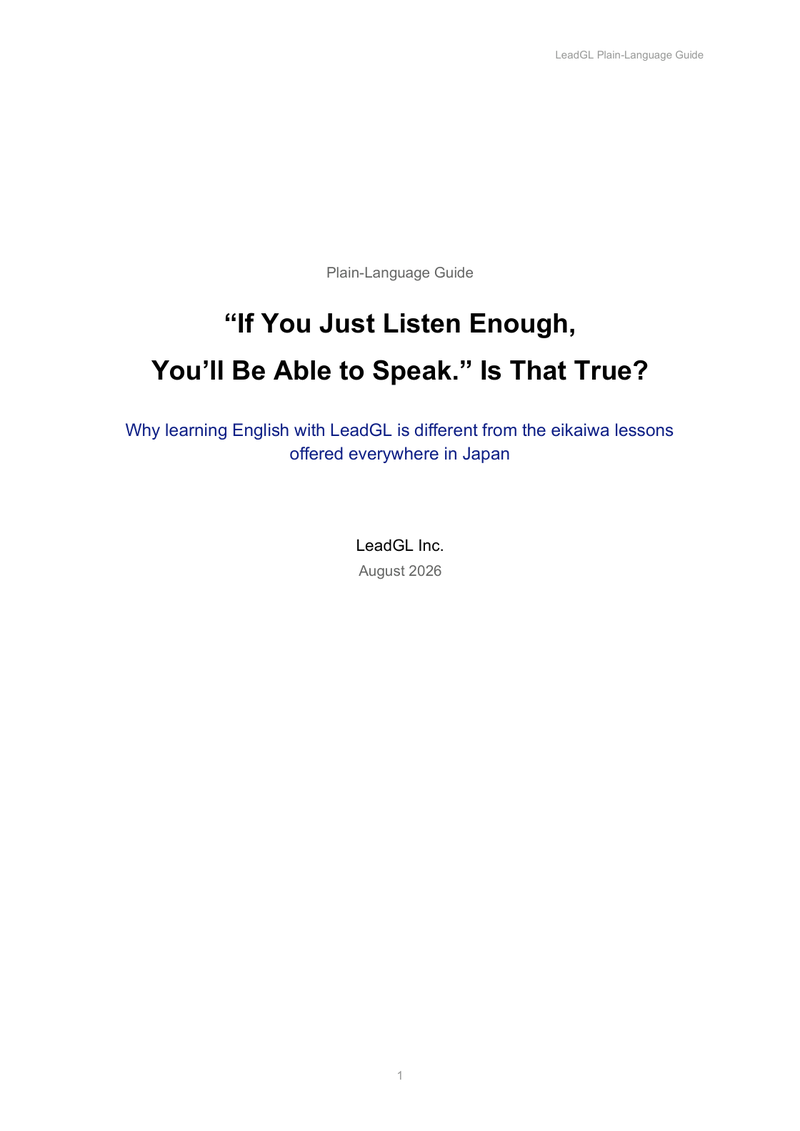
- Title
- “If You Just Listen Enough, You’ll Be Able to Speak.” Is That True?
Why learning English with LeadGL is nothing like an eikaiwa class - Type
- Plain-language guide
- Published
- August 2026 / LeadGL Inc.
- Format
- PDF, A4, 4 pages
- Contents
- Five sections, a comparison table, and the research behind it
What this guide covers
You will often see an English learning service in Japan described as “based on second language acquisition theory.” What that phrase actually refers to varies enormously from one service to the next.
Usually it refers to the idea Krashen put forward in the 1980s: listen to enough English and speaking will follow on its own. In Japan the idea spread through Yasuhiro Shirai’s The Science of Foreign Language Learning (2008), and it still underpins most eikaiwa schools and learning apps here.
Research since then has moved further. The work that carries Krashen’s idea forward, and that the evidence supports far better, is that of VanPatten. Specialists have regarded it highly for years, yet it is barely known in Japan. Much of what separates LeadGL from an ordinary eikaiwa service comes from exactly that: work that is less famous, but newer and far better evidenced.
“Just listen enough and you’ll speak.”
Is That True?
We will send the plain-language guide (PDF, A4, 4 pages) free of charge. The button below takes you to the request form, with the title of this guide already filled into the “Other questions” field.
This is not an instant download. Someone on our team reads each request and emails the paper to the address you give us.
You might also want
See a LeadGL program up close
We will walk you through the method and show you what a program actually looks like.